Greece’s Sinking Bridges and a Roman Emperor’s 2,000-Year-Old Dream: The Secrets of Corinth
When most travelers dream of Greece, their minds fill with images of the Acropolis standing sentinel over Athens or the sun-bleached villages of the Cycladic islands. These are iconic, essential experiences. But just an hour’s drive from the capital lies a destination that offers a different, deeply fascinating layer of Greek history and modern ingenuity: Corinth.
Nestled on the narrow isthmus that once connected the Peloponnese peninsula to the mainland, Corinth is more than just another archaeological site. It’s a place where ancient ambition meets modern marvels, a thread connecting the dreams of emperors to the daredevilry of today. Here, history is not a static ruin but a living story of perseverance, clever engineering, and dramatic discoveries hiding in plain sight.
This isn’t your typical tour of Doric columns. Prepare to discover the counter-intuitive, the surprising, and the truly impactful facts about both Ancient Corinth and its famous canal—details that reveal how ancient dreams, 19th-century industrial power, and 21st-century adventure all converge in one extraordinary place.
1. The Canal Was a 2,000-Year-Old Dream Built on Ancient Ingenuity
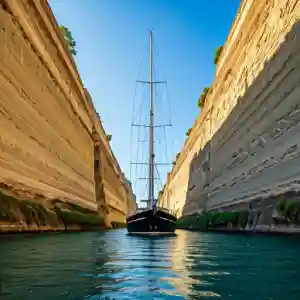
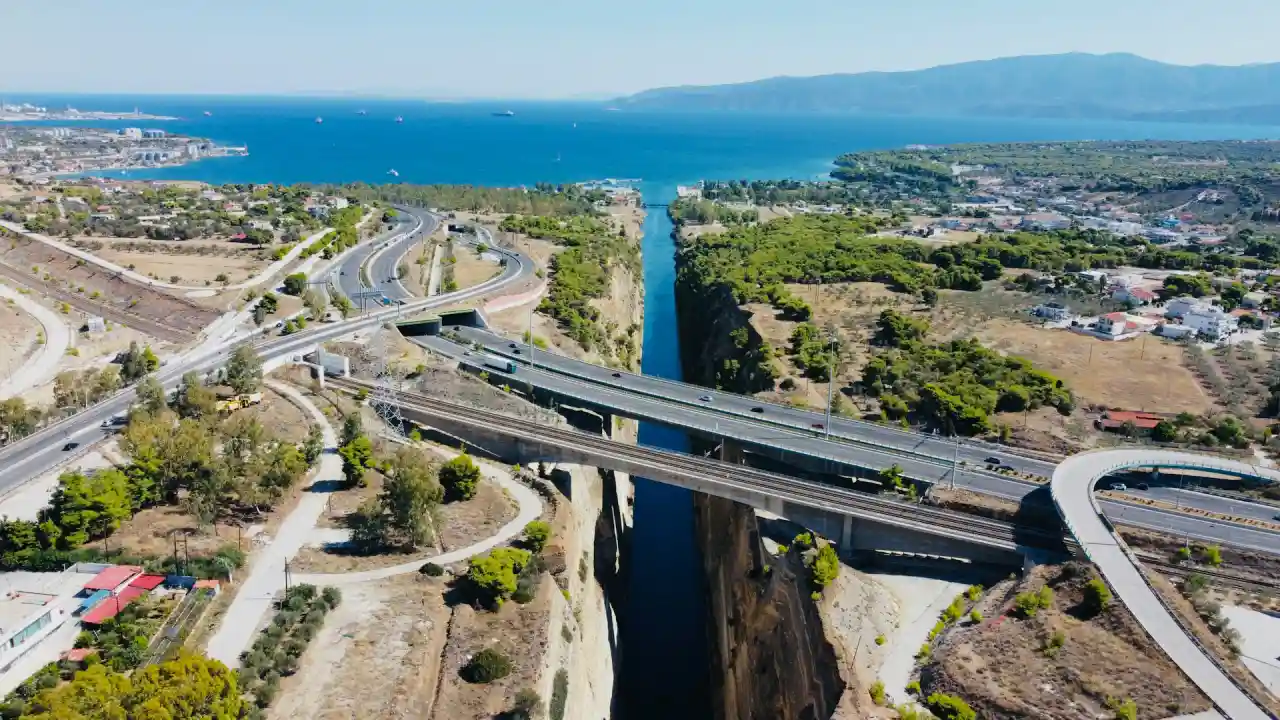
The breathtakingly narrow slice of blue water cutting through vertical rock walls looks like a distinctly modern feat, but its story began in the 7th century BC. It was then that Periander, the tyrant of Corinth, first proposed a canal to let ships avoid the treacherous 400-kilometer journey around the Peloponnese. The idea was brilliant but impossible for the time. Instead, the ancients engineered an ingenious workaround: the Diolkos, a paved road with guide ruts, allowing ships to be dragged overland between the two seas.
For centuries, this was the practical solution. The grand dream of a canal re-emerged in 67 AD with the Roman Emperor Nero, who personally began the excavation with a golden spade in a grand ceremony. Yet the project’s sheer scale was overwhelming; after his death, it was abandoned with only a tenth of the required distance covered.
It would take another 1,800 years for technology to catch up. Inspired by the construction of the Suez Canal, work began again, and in 1893, the Corinth Canal was finally inaugurated. It stands today not just as a waterway, but as a testament to an ambition so powerful it outlasted empires. And while the canal itself fulfilled an ancient dream, the modern solutions to cross it are just as mind-bending.
2. The Bridges Don’t Lift—They Sink
When faced with the need for a bridge over a busy shipping lane, most people think of drawbridges that lift or swing bridges that pivot. The Corinth Canal, however, employs a far more surprising and rare solution: submersible bridges. Instead of rising to let ships pass, these bridges sink.
Located at each end of the canal, these unique structures descend more than four fathoms—that’s 25 feet, in sailor’s terms—beneath the surface. This clever design, installed in 1988, ensures that there are no height restrictions for the masts of sailboats and other vessels passing through the deep trench. Watching a road simply disappear beneath the waves to make way for a ship is an unexpected piece of engineering magic, a modern marvel that answers the challenge of this ancient waterway in a way its original visionaries could never have imagined.
3. It’s an Adrenaline Junkie’s Paradise (with a Razor-Thin Margin for Error)
The historic canal is not just a shortcut for ships; it’s also one of Greece’s premier destinations for thrill-seekers. From a bridge suspended over the stunning chasm, the provider Zulu Bungy offers one of the world’s most exhilarating bungee jumping experiences. For those brave enough to take the leap, the review says it all:
Absolutely terrifying, but loved every minute of the jump on such an iconic canal
While adventurers are free-falling for fun, ship captains are navigating one of the tightest squeezes in the maritime world. The journey feels like sailing through a natural limestone tunnel, with cliffs towering up to 260 feet on either side. At its narrowest, the channel is only 21.3 meters wide, demanding incredible precision. This razor-thin margin was put on dramatic display in 2019 when the 22.5-meter-wide cruise ship Braemar slid through with just 70 centimeters to spare on each side—a feat of navigation that highlights the intense, claustrophobic challenge of traversing this man-made canyon.
4. Ancient Corinth’s Biggest Stories Involve Perfume Flasks and Art Smugglers
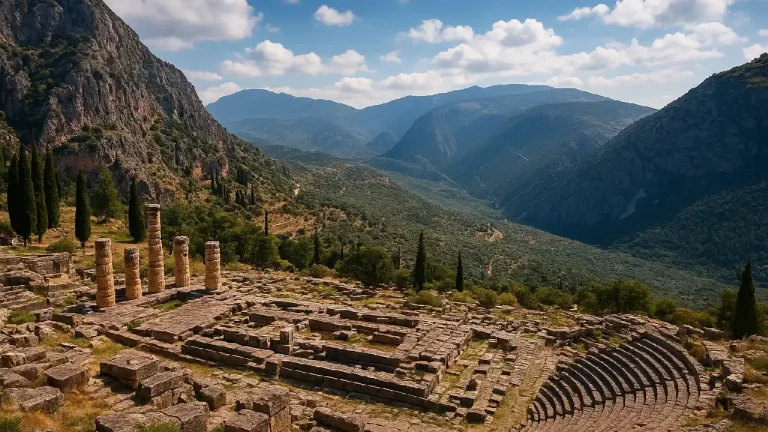
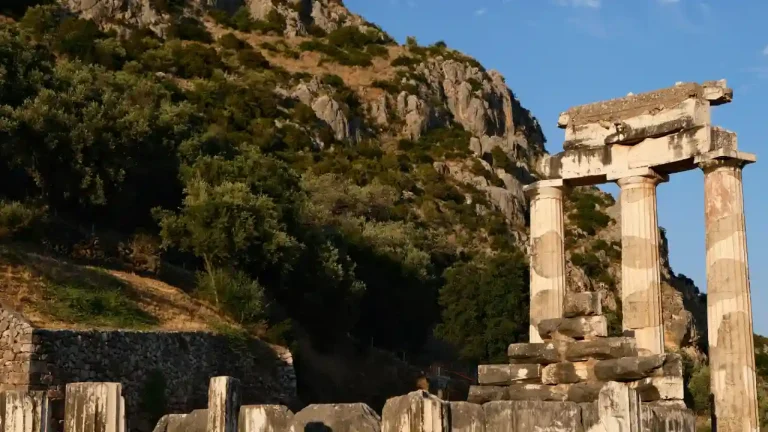
Beyond the famous Temple of Apollo, the archaeological site of Ancient Corinth reveals its history as a bustling commercial and artistic powerhouse. In antiquity, the city was a major hub of trade, renowned across the Mediterranean for its distinctive pottery. Corinthian artisans were innovators, inventing the “black-figure technique” that revolutionized vase painting. Among their most famous products was the aryballos, a tiny, beautifully decorated flask used to store and transport valuable perfume—a small object representing immense economic influence.
But the city’s artistic legacy is also tied to a much more modern and dramatic story. In 2010, two remarkable life-sized marble statues, the twin Kouroi of Klenia, were confiscated from antiquity smugglers in a nearby village. Dating from around 530 B.C.E., these priceless Archaic sculptures were found shattered into pieces. After years of painstaking restoration, the twin statues now stand in their complete, powerful form in the Corinth Archaeological Museum. The discovery provides a direct link between the ancient world and the contemporary challenges of protecting cultural heritage, reminding us that the stories of Corinth are still being unearthed today.
Conclusion: A Shortcut Through Time
Corinth is a place that defies simple categorization. It is a unique microcosm of human history, where a 2,000-year-old dream was realized by 19th-century power, where 20th-century bridges sink beneath the waves, and where 21st-century adrenaline meets the breathtaking precision of maritime navigation—all within the same four-mile stretch of land and water. Its ancient city tells stories not just of gods and temples, but of artistic innovation, commercial might, and the modern-day fight to reclaim a stolen past. Corinth is more than a day trip; it’s a shortcut through time itself.
What other marvels of history are hiding just an hour away from the well-trodden tourist path?