Ancient Mycenae and Its Enduring Legacy
Ancient Mycenae stands as one of the most important centers of early Greek civilization. Located in the northeastern Peloponnese, this famous Mycenaean site played a crucial role during the Late Bronze Age. Its massive walls, royal tombs, and strategic position made it a symbol of power and authority. Today, the mycenae archeological site offers valuable insight into the foundations of Greek history and myth.
The History of Mycenae
The history of Mycenae begins around 1600 BCE, when it emerged as a dominant political and military power. Mycenaean rulers controlled extensive trade networks across the Aegean and beyond. Wealth flowed into the city, allowing the construction of monumental architecture and richly furnished graves. These developments marked Mycenae as a leading force in the ancient world.
By around 1200 BCE, Mycenae began to decline along with other Mycenaean centers. The reasons are still debated, but possible causes include natural disasters, internal conflict, and invasions. Despite its fall, the memory of Mycenae survived through myths, especially the Homeric epics. These stories preserved the city’s reputation long after its political power faded.
The Acropolis of Mycenae
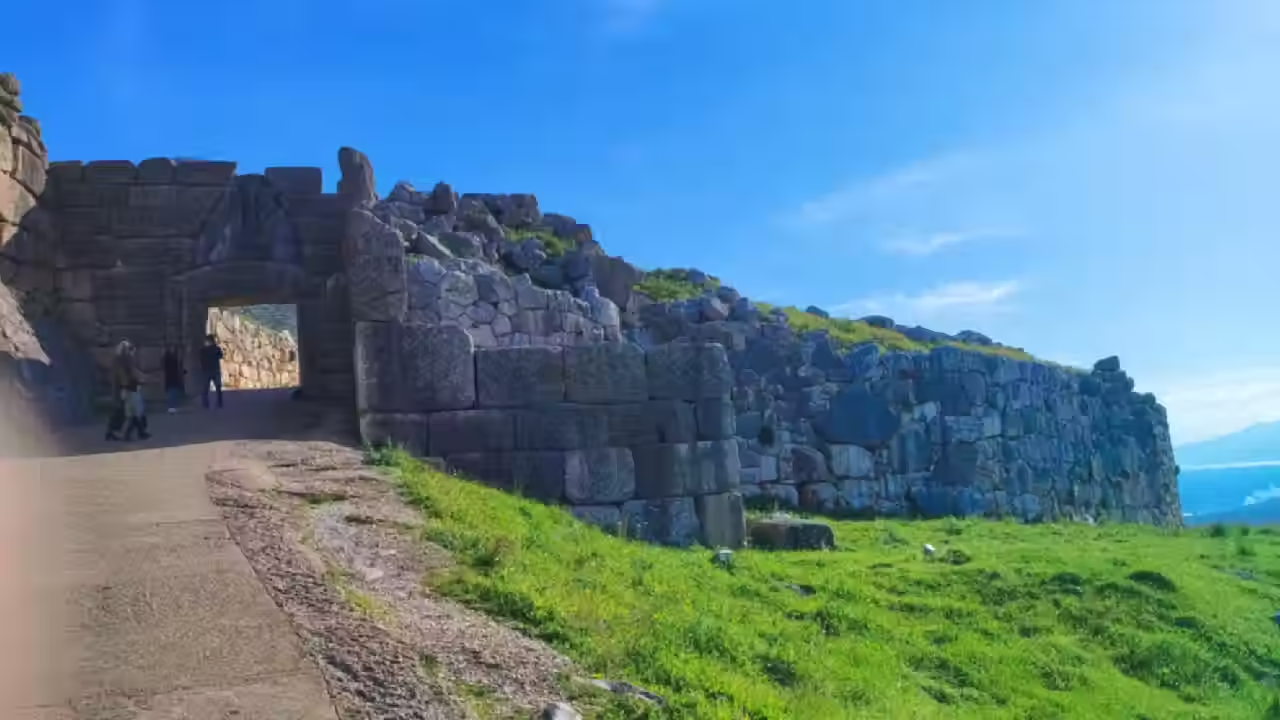
The acropolis Mycenae dominates the landscape and reflects the city’s defensive priorities. Built on a rocky hill, it was protected by massive Cyclopean walls made of huge limestone blocks. Ancient Greeks believed only giants could have moved stones of such size. The walls served both practical and symbolic purposes, demonstrating strength and authority.
The Lion Gate and Royal Structures
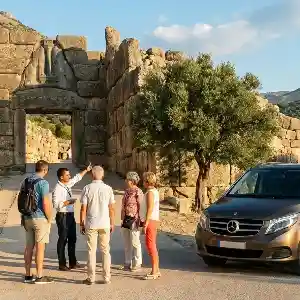
The Lion Gate is the most iconic entrance to the acropolis. Its sculpted relief of two lions is one of the earliest examples of monumental sculpture in Europe. Inside the walls stood palatial buildings, workshops, and storage areas. These structures reveal the administrative complexity of Mycenaean society and its centralized control.
The Mycenae Archaeological Site
The mycenae archeological site includes more than just the acropolis. Surrounding areas contain grave circles, tholos tombs, and remnants of roads and bridges. The Grave Circle A, discovered in the nineteenth century, revealed gold masks and weapons that confirmed the city’s legendary wealth. These finds transformed modern understanding of Bronze Age Greece.
Ongoing research continues to uncover details about daily life, trade, and social hierarchy. Archaeologists study pottery, tools, and fresco fragments to reconstruct how people lived and worked. The site remains a key reference point for anyone interested in Aegean archaeology and early European history.
Religion and the Mycenae Temple
Religion played an important role in Mycenaean life, although temples were different from later Greek models. Evidence suggests that worship took place in small shrines or designated rooms within palaces. A mycenae temple likely functioned as a cult center dedicated to deities that later appeared in Greek mythology. Figurines and ritual objects found at the site support this interpretation.
These early religious practices influenced later Greek beliefs. The continuity between Mycenaean and classical religion highlights the cultural legacy of ancient Mycenae. Understanding these sacred spaces helps explain how spiritual life shaped political and social structures.
The Mycenae Museum
The mycenae museum, located near the archaeological site, houses many important discoveries. Exhibits include pottery, weapons, jewelry, and inscriptions that illustrate Mycenaean craftsmanship. Clear displays and explanations help visitors connect artifacts with the wider history of Mycenae.
Visiting the museum enriches the experience of exploring the ruins. It provides context for the architecture and landscapes seen outside. Together, the museum and site offer a complete picture of this influential civilization.
Why Ancient Mycenae Still Matters
Ancient Mycenae continues to attract scholars and travelers from around the world. As a UNESCO World Heritage Site, it is recognized for its outstanding cultural value. The city’s achievements in architecture, warfare, and administration shaped the development of Greek civilization.
By studying ancient Mycenae, we gain insight into the origins of European history. Its ruins remind us of a society that combined power, artistry, and myth. This enduring legacy ensures that Mycenae remains a vital part of our shared past.