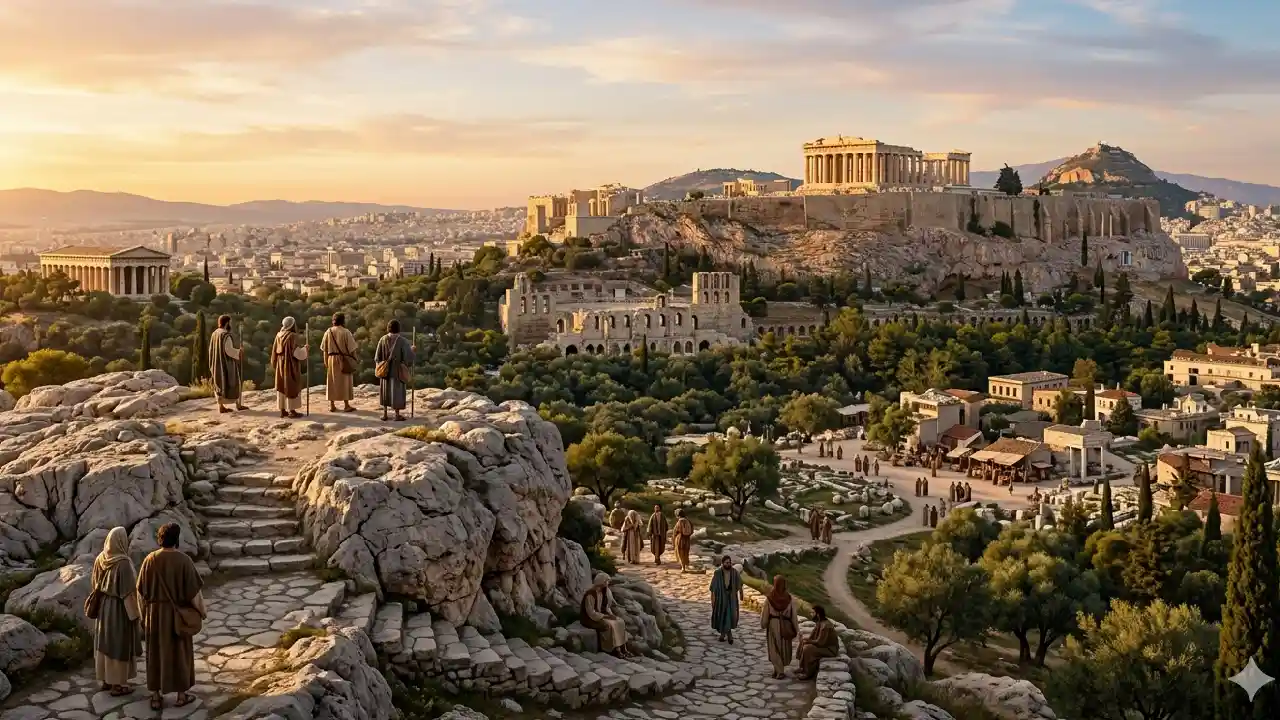
Biblical Sites in Athens: A Journey Through Faith and History
Athens is often celebrated as the birthplace of democracy, philosophy, and classical civilization, but many travelers overlook another powerful layer of its identity — its deep biblical significance. The city played a major role in the spread of Christianity during the first century and remains one of the most important destinations for Christian travelers exploring the footsteps of the Apostle Paul. The biblical sites in Athens Greece combine ancient ruins, sacred churches, and historical landmarks that connect visitors directly to stories found in the New Testament.
Walking through Athens feels like stepping into the pages of the Bible. Massive marble structures tower over narrow streets, while centuries-old churches stand beside lively cafés and bustling markets. This fascinating contrast creates a unique spiritual atmosphere. For Christians, history lovers, and curious travelers alike, Athens offers an unforgettable opportunity to see where faith met philosophy in one of the world’s most influential cities.
The city is especially connected to Acts 17, where Paul delivered his famous sermon on Mars Hill, also known as the Areopagus. His message challenged the Athenians to rethink their understanding of God, using their own altar “To an Unknown God” as a starting point. That moment became one of the most significant encounters between early Christianity and Greek intellectual culture.
Today, visitors can explore the exact places where these biblical events unfolded. From the ancient Agora to Byzantine monasteries and historic churches, Athens preserves countless treasures that reveal how Christianity gradually transformed the city. Whether you are planning a pilgrimage or simply searching for meaningful historical experiences, the biblical landmarks of Athens offer inspiration at every corner.
Why Athens Holds Biblical Importance
Athens occupies a unique place in biblical history because it served as a crossroads of philosophy, religion, commerce, and intellectual debate during the Roman era. Unlike Jerusalem, which was deeply rooted in Jewish traditions, Athens represented the height of pagan Greek culture. This made Paul’s visit especially significant. He entered a city filled with temples, idols, and schools of philosophy, yet he boldly preached the Gospel in a place where many competing beliefs already existed.
The Bible describes Athens as a city “full of idols.” Ancient Athenians worshipped numerous gods, including Athena, Zeus, Apollo, and Poseidon. Religion influenced every aspect of daily life, from politics to education. Temples and statues dominated the city landscape, and public discussions about truth and morality were common in marketplaces and public forums. For Paul, Athens presented both a challenge and an opportunity.
His sermon at the Areopagus became a turning point in Christian history because he approached the Athenians differently than he did other audiences. Instead of quoting Hebrew scriptures extensively, Paul referenced Greek poetry and philosophy. He connected Christian teachings with ideas the Athenians already understood, showing remarkable cultural awareness and wisdom.
Athens also symbolizes the meeting point between faith and reason. Philosophers such as Socrates, Plato, and Aristotle shaped Western thought centuries before Christianity arrived. Paul’s engagement with Stoic and Epicurean philosophers demonstrated that Christianity could speak meaningfully into intellectual conversations rather than avoiding them.
Today, this rich heritage attracts thousands of Christian pilgrims each year. Visitors can stand where Paul once stood and reflect on how the Gospel spread beyond Jewish communities into the broader Greco-Roman world. The biblical sites in Athens continue to inspire believers who want to deepen their understanding of scripture while exploring one of history’s most influential cities.
The Areopagus (Mars Hill)
The Areopagus, commonly called Mars Hill, is undoubtedly the most famous biblical site in Athens. Located just northwest of the Acropolis, this rocky hill served as the meeting place of Athens’ high court and a center for philosophical debate. According to the Book of Acts, Paul was brought here to explain his teachings to the intellectual leaders of the city.
Standing atop Mars Hill today creates a powerful emotional experience. Visitors enjoy sweeping views of the Acropolis while imagining the moment Paul addressed skeptical philosophers and curious listeners nearly 2,000 years ago. The smooth marble steps leading to the summit have been worn down by centuries of footsteps, adding a tangible connection to the past.
Paul’s Famous Sermon at Mars Hill
Paul’s speech on Mars Hill remains one of the most quoted sermons in Christian history. In Acts 17:22-31, he observed that the Athenians were “very religious” and used their altar dedicated “To an Unknown God” as a bridge to introduce the Christian God. Instead of condemning his audience immediately, Paul carefully built common ground with them.
He explained that God does not live in temples made by human hands and emphasized that all people are created by one Creator. Paul also challenged the Athenians to move beyond idol worship and seek a personal relationship with God. Some listeners mocked him when he mentioned the resurrection, while others wanted to hear more. A few even became believers, including Dionysius the Areopagite.
This sermon is often studied by theologians because it demonstrates how Christians can communicate faith respectfully within different cultures and intellectual traditions.
What Visitors Can See Today
Modern visitors to Mars Hill can explore the rocky platform where Paul likely stood while preaching. Informational plaques display portions of Acts 17 in multiple languages, helping tourists connect scripture with the physical location.
The site also offers breathtaking views of Athens, including the Acropolis, Ancient Agora, and surrounding neighborhoods. Early morning and sunset are particularly popular times to visit because the lighting creates a dramatic atmosphere perfect for reflection and photography.
The Ancient Agora
The Ancient Agora was the political, social, and commercial center of Athens during Paul’s visit. This large public space functioned as a marketplace where citizens gathered to trade goods, discuss philosophy, and debate important issues. According to scripture, Paul spent time here reasoning with people daily.
Walking through the Agora today reveals the heartbeat of ancient Athenian life. Stone pathways, temple ruins, and restored buildings help visitors visualize the environment Paul encountered. Unlike the grandeur of the Acropolis, the Agora reflects ordinary daily interactions where ideas and beliefs spread naturally through conversation.
The Marketplace Where Paul Preached
Paul’s ministry in Athens extended beyond formal speeches. The Agora allowed him to engage directly with merchants, travelers, philosophers, and curious citizens. This public interaction eventually attracted the attention of Stoic and Epicurean thinkers who invited him to speak at the Areopagus.
The Agora demonstrates how Christianity spread through personal dialogue and public engagement rather than isolated gatherings. Paul entered everyday spaces where people already exchanged ideas, making the Gospel accessible to a wider audience.
Key Archaeological Highlights
Several important structures remain within the Ancient Agora. The Temple of Hephaestus, one of the best-preserved ancient Greek temples, towers above the site and showcases the religious environment Paul witnessed. Visitors can also explore the Stoa of Attalos, a reconstructed building now housing the Agora Museum.
Artifacts displayed inside the museum include pottery, statues, coins, and inscriptions that provide insight into daily life during the first century. These discoveries help travelers better understand the social and religious world described in the New Testament.
The Parthenon and Pagan Worship
The Parthenon dominates the Acropolis and symbolizes ancient Greek religion and culture. Dedicated to the goddess Athena, this magnificent temple represented the pride and spiritual identity of Athens. During Paul’s visit, the Acropolis would have been filled with statues, altars, and offerings dedicated to various gods.
For Christian visitors, the Parthenon offers important context for understanding Paul’s message. He preached monotheism in a city famous for polytheism. Every visible structure around him reinforced the worship of multiple gods, making his teachings revolutionary.
How Greek Religion Influenced Paul’s Message
Paul carefully tailored his sermon to address the Athenians’ religious mindset. Instead of beginning with Jewish law, he focused on universal truths about creation, humanity, and divine purpose. His references to Greek poets demonstrated familiarity with local culture and allowed him to connect biblical truth with ideas his audience recognized.
The contrast between the Parthenon and Paul’s teachings highlights Christianity’s challenge to idol worship. While the Athenians admired artistic representations of their gods, Paul emphasized a living Creator beyond human imagination and craftsmanship.
Today, the Parthenon remains one of the world’s most iconic monuments and a central stop for anyone exploring biblical sites in Athens Greece.
The Church of Panagia Kapnikarea
Nestled in the middle of modern Athens, the Church of Panagia Kapnikarea provides a striking contrast to the city’s ancient pagan landmarks. Built in the 11th century, it is one of the oldest surviving churches in Athens and reflects the city’s transition from paganism to Christianity.
The church’s Byzantine architecture, intricate frescoes, and peaceful atmosphere make it a favorite destination for spiritual travelers. Despite being surrounded by busy shopping streets, stepping inside feels like entering another world.
One of Athens’ Oldest Churches
Panagia Kapnikarea survived numerous historical challenges, including Ottoman rule and urban redevelopment. Today, it stands as a symbol of enduring Christian faith in Athens.
Visitors often light candles, admire religious artwork, and participate in worship services. The church reminds travelers that Christianity eventually became deeply rooted in the city once known primarily for pagan philosophy and idol worship.
Conclusion
Athens is far more than an ancient cultural capital. It is a living biblical landscape where faith, philosophy, and history intersect in remarkable ways. From Paul’s sermon on Mars Hill to the bustling conversations of the Ancient Agora, the city preserves key moments that shaped the spread of Christianity throughout the world.
Exploring the biblical sites in Athens Greece allows travelers to connect scripture with real historical locations. Each site tells part of a larger story — a story of courage, intellectual dialogue, spiritual transformation, and enduring faith.
Whether standing atop the Areopagus, wandering through the Agora, or praying inside a Byzantine church, visitors experience a deeper understanding of the New Testament and the challenges faced by the early Christian church. Athens continues to inspire pilgrims and history enthusiasts alike, proving that ancient stones still have powerful stories to tell.